 A recent article in MHI Solutions, written by Tom Gresham, highlights how a coordinated effort across three leading industry groups is advancing overhead lifting safety. Through collaboration, the Overhead Alliance is improving training, strengthening standards, and promoting best practices for the safe use of cranes, hoists, and monorails.
The Overhead Alliance brings together Hoist Manufacturers Institute (HMI), Monorail Manufacturers Association (MMA), and Crane Manufacturers Association of America (CMAA) to deliver a unified voice on safety. Acting as a collective marketing and education arm, the Overhead Alliance amplifies each group’s expertise while making critical safety information more accessible to manufacturers, operators, and facility leaders.
A Collaborative Approach to Overhead Lifting Safety
The Overhead Alliance actively promotes the safe design, application, and operation of overhead lifting equipment. By aligning messaging and resources across HMI, MMA, and CMAA, the Alliance ensures that safety guidance reaches key audiences in a clear and practical way.
The Alliance also focuses on the intersection of these technologies. It helps users better understand how cranes, hoists, and monorails work together safely as applications evolve to include higher-capacity equipment and increased automation.
Advancing Safety Through Standards and Specifications
A core pillar of overhead lifting safety is the ongoing development and refinement of industry standards. The alliance plays a key role in highlighting and supporting this work across its member groups.
As noted in the MHI Solutions article, Rose Haire, manager of the three Overhead Alliance industry groups, emphasized the importance of this effort.
“The specifications and standards that they maintain are a very important part of their mission because they take great pride in their work, and they want to ensure that the products are used the way they are supposed to be used and in the safest manner possible,” she said.
CMAA, for example, updates its specifications on a regular cycle to reflect changes in technology and application, including recent updates to multiple girder cranes, single girder cranes, professional services, and crane operator guidance. Similarly, MMA continues to update standards for underhung cranes and monorail systems to ensure safe and effective operation.
Built-In Safety Advantages of Overhead Systems
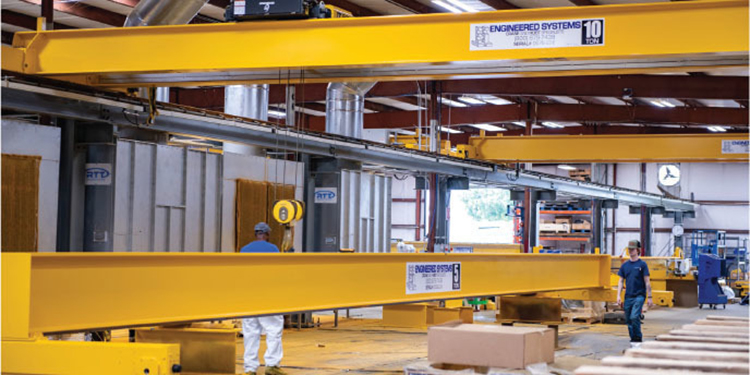
The alliance also emphasizes the inherent safety benefits of overhead lifting systems. By operating within a defined area, these systems help limit worker exposure to hazards such as forklift traffic and congestion on the factory floor.
Additionally, overhead lifting reduces the need for manual handling, helping workers avoid strain-related injuries. Advanced controls and monitoring features further enhance safety by allowing operators to maintain a safe distance from loads while preserving clear visibility during movement.
Erin Drake, head of the Overhead Alliance and director of marketing for R&M Materials Handling and Demag Cranes & Components, pointed to the wide range of safety resources promoted through the alliance, including materials focused on inspection, maintenance, hazard identification, and safe daily operation.
Training Tools That Reinforce Safe Practices
To support ongoing education, the Overhead Alliance provides a centralized hub of safety resources, specifications, and standards. The alliance also promotes interactive tools designed to improve understanding of safe operations.
These include virtual and interactive experiences that allow users to simulate operating overhead equipment—from bridge cranes to hoists and monorail systems—within a realistic factory environment. These tools give users a practical perspective on how to safely move materials and navigate complex workflows.
Creating a Safer Future for Material Handling
By combining the expertise of hoist, crane, and monorail manufacturers, the Overhead Alliance continues to elevate safety across the material handling industry. Its unified approach ensures that overhead lifting safety remains a top priority—supported by updated standards, innovative training tools, and clear, consistent guidance.
As highlighted in MHI Solutions, this collaborative effort is helping manufacturers create safer environments, improve operational efficiency, and adapt to the evolving demands of modern material handling.