Hoist Case Studies in Automotive, Manufacturing, and Foundry Operations
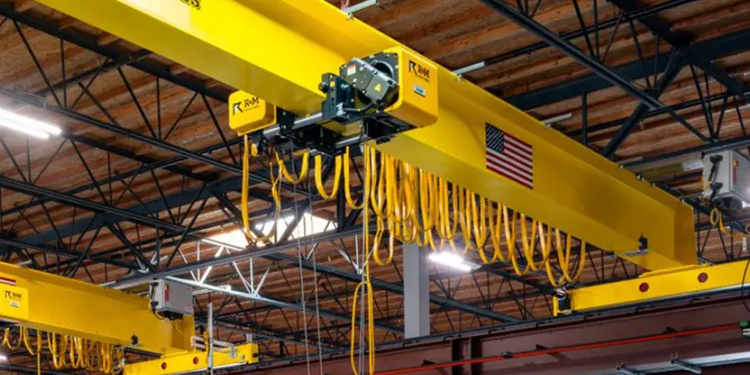
How do manufacturing and warehousing operations use hoists to handle heavy loads safely overhead? A series of member case studies, shared by the Hoist Manufacturers Institute (HMI), offer a closer look at how companies solve such challenges. Published on HMI’s website, there are numerous examples of case studies detailing how hoists enhance safety, productivity, and throughput in complex processes.
The following three sample case studies from HMI illustrate how facilities in automotive, manufacturing, and foundry industries deployed hoists to improve their operations.
HMI Case Study #1: Custom Hoist and Crane System Improves Lifting Safety and Capacity for Autoclave Manufacturing
An autoclave and industrial oven manufacturer needed a safer, more efficient way to handle heavy components as production demand increased. The company’s existing facilities had reached capacity, prompting the addition of a new building to support continued growth. Within this expanded space, workers needed to lift and move loads ranging from 5 to 30 tons during fabrication and assembly. Maintaining overhead lifting safety while handling these large, complex loads was a top priority.
Engineers designed a custom overhead lifting solution using equipment from an HMI member company. The system included two 15-ton hoists used on a single, 30-ton capacity crane, as well as three 5-ton capacity overhead bridge cranes.
To improve both safety and usability, operators control the system using a wireless remote. This allows them to maintain a safe distance from loads while keeping a clear line of sight during movement. The overhead configuration reduces reliance on ground-based handling methods, helping minimize congestion and lowering the risk of workplace injuries.
The new hoist and crane system gives the manufacturer the space and capability to handle larger workloads in a safer operating environment. By moving material handling operations overhead, the company reduced manual lifting requirements and improved control when positioning heavy components. The custom structural design also ensures that the system meets seismic requirements without interfering with crane operation.
HMI Case Study #2: Automotive Plant Uses Hoist System to Handle Large, Heavy Plastic Injection Molds
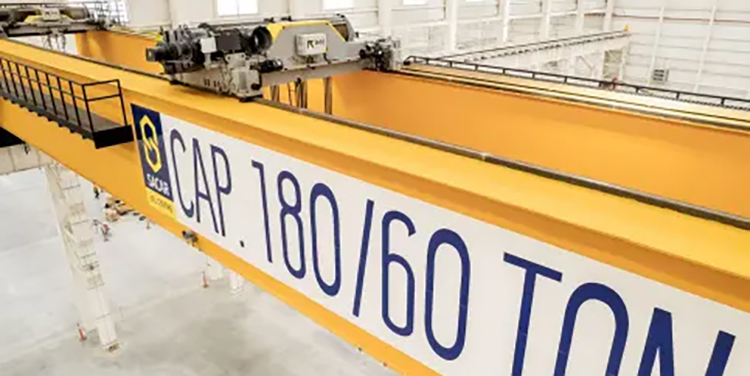
A Tier 1 automotive supplier launching a plastic injection molding process needed a safe, reliable way to handle large, heavy molds inside its Mexico facility. The operation required safe, high-capacity overhead lifting systems capable of supporting continuous production. Because the molds were both heavy and critical to the manufacturing process, ensuring precise control and hoisting safety was essential.
Engineers worked closely with an HMI member to design a custom overhead hoist and crane solution. After months of detailed planning and engineering, the team installed two double-girder overhead traveling cranes. The primary crane features a 180-ton main hook with a 60-ton auxiliary hook, while the secondary crane includes a 25-ton main hook and a 15-ton auxiliary hook.
To ensure safe and precise load handling, the system incorporates several safety and control features. Anti-sway hoist technology stabilizes loads during movement, while restricted operating zones and anti-collision sensors help prevent accidents. Auto-centering functions and radio remote controls allow operators to maintain safe distances while accurately positioning molds.
The completed installation allows the facility to handle heavy molds with greater control, precision, and reliability. By combining high-capacity lifting with advanced safety technologies, the system reduces risk while supporting continuous operation. Operators can now move large loads smoothly and safely across the production floor.
HMI Case Study #3: Foundry’s New Hoist System Moves Molds, Cores, and Heavy Materials
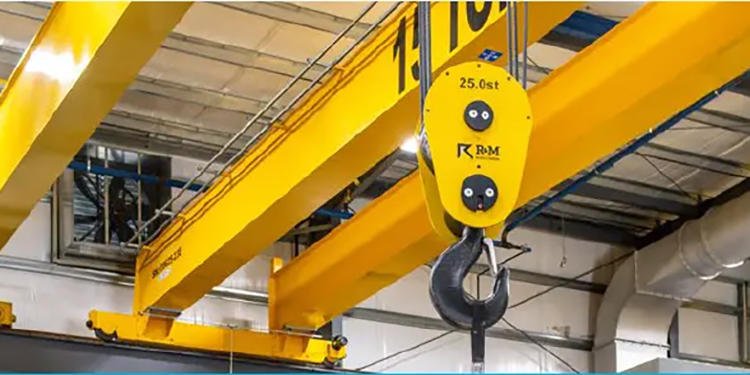
A growing foundry operation needed a safer and more efficient way to handle materials as it expanded production capacity. As part of a new no-bake foundry addition, the facility required overhead hoist systems to support side floor molding processes used for large, lower-volume castings. These operations involved moving molds, cores, and heavy materials throughout a busy production environment.
Engineers worked with an HMI member company to design and install a custom overhead hoist and crane system tailored to the facility’s needs. The solution included hoists serving two 25-ton capacity cranes, along with 15-ton and 5-ton models, all spanning approximately 76.5 feet with lift heights of up to 29 feet.
To improve material flow and eliminate forklifts, the system incorporated trolley configurations that allow loads to move seamlessly between crane bays. Operators control the cranes using radio remote systems, giving them greater flexibility and visibility while maintaining a safe distance from loads. This approach enhances both safety and efficiency, particularly in a dynamic foundry environment.
The completed installation allows the facility to move materials more smoothly and safely throughout the production process. By shifting material handling operations overhead, the company reduced floor congestion and minimized potential hazards associated with forklift traffic. The hoists and cranes operate quietly and precisely, supporting consistent performance while improving overall workflow.
Read More Hoist Case Studies
Hoist Manufacturers Institute (HMI) member companies are the leading suppliers of hoist equipment—including hand chain hoists, lever hoists, trolleys, air chain hoists, air wire rope hoists, electric chain hoists and electric wire rope hoists—in North America. The organization advocates for improved hoist safety and performance. On its website, HMI offers multiple members case studies detailing the design and use of hoist technologies in various applications. Free to download, these case studies explore the safety and productivity benefits delivered by hoists.