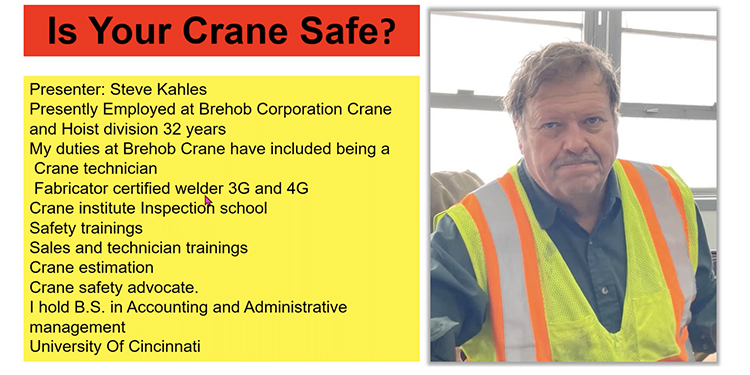
Crane incidents and overhead lifting failures are rarely the result of a single mistake. More often, they stem from small oversights, improper design decisions, or long-accepted practices that go unchallenged. That was the central message of a recent webinar, “Is Your Crane Safe?,” presented by Steve Kahles, Branch Manager at Brehob Corp., and hosted by the Overhead Alliance.
With more than 30 years of experience in the overhead lifting industry, Kahles drew on thousands of crane installations, inspections, and accident investigations. His presentation highlighted common—and often dangerous—misapplications seen across industrial facilities. His goal was not to assign blame. Rather, he hoped to raise awareness and encourage proactive intervention before incidents occur.
“See Something, Say Something”
Kahles opened the session with a principle he applies in every training session: “See something, say something.” Drawing parallels to National Transportation Safety Board (NTSB) guidance, he emphasized that unsafe conditions often persist because they go unreported or unchallenged.
Over the course of his career, Kahles has participated in more than 200 accident investigations, including incidents involving fatalities. In his experience, nearly all of these overhead lifting failures were preventable.
“Many shared the same root causes,” he said. “Inadequate training, lack of engineering oversight, and acceptance of ‘the way it’s always been done.’”
Training Gaps and Lack of Oversight
One of Kahles’ primary concerns is the lack of consistent crane and hoist training.
“Forklift and aerial lift training is widely emphasized, but overhead crane training is often treated as an afterthought,” he explained. “That’s despite the risks of lifting heavy loads over personnel.”
Kahles also pointed out that many crane systems lack proper engineering oversight. In the U.S., laws do not always require a professional engineer to design crane runways and support structures. As a result, fabricators and installers sometimes build systems without fully analyzing loads, deflection, or lateral forces.
He described the current landscape bluntly: “In some cases, crane systems resemble ‘the Wild West.’ I’ve seen designs that ignore industry intent, best practices, and long-term safety implications.”
Real-World Examples of Unsafe Practices
Throughout the webinar, Kahles shared real-world examples—many from well-known companies—that illustrate how unsafe crane systems develop over time. Common issues included:
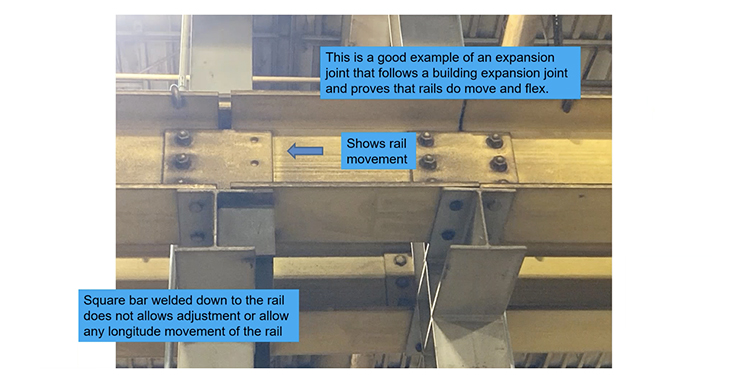
- Crane runways with excessive lateral movement due to improper deflection criteria.
- Tie-backs connected to pre-engineered buildings not designed to absorb crane forces.
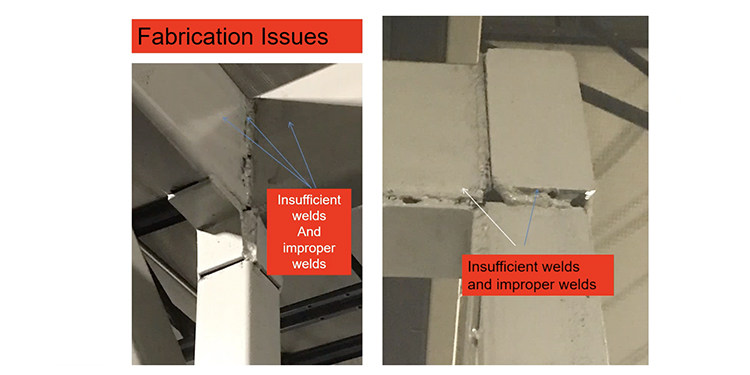
- Undersized columns, base plates, and welds incapable of supporting rated loads.
- Homemade cranes, jibs, and monorails fabricated without engineering review.
- Poor-quality fabrication and welds that create hidden failure points.
In several cases, Kahles described incidents where systems visibly moved under no load—an immediate red flag. In others, failures occurred during load testing or shortly after commissioning, resulting in costly downtime and near-miss events.
Guided Loads Increase Risk of Overhead Lifting Failures
A recurring theme throughout the presentation was the danger of guided loads. Hoist manufacturers explicitly warn against loads that are constrained, guided, or restricted from moving freely under the hook. Yet Kahles showed multiple examples where guided loads were being used routinely.
“These applications introduce shock loading, side loading, and excessive stress on beams, hoists, and runways,” he explained. “Over time, guided loads accelerate wear and damage components. That significantly increases the risk of catastrophic overhead lifting failures.”
Kahles also addressed improper uses of hoists to lift people, open doors, or move machinery.
“All of these use applications are clearly prohibited by manufacturers and OSHA guidance,” he stressed. “While these systems may function temporarily, they create unacceptable risk for workers operating nearby.”
Design, Documentation, and Field Verification
To counter the risks of overhead lifting failures, Kahles outlined a disciplined approach to crane system design and installation. His process begins with a concept sketch, followed by professional engineering review, detailed drawings, and field verification. He strongly advised documenting every system with photographs and records to ensure traceability over its life cycle.
This documentation becomes critical if capacity changes are requested, incidents occur, or inspections reveal concerns. Without it, facilities are left guessing how systems were designed, or whether they were designed at all.
Load Testing, Inspections, and Accountability
Kahles also repeatedly emphasized that proper load testing, commissioning, and inspection are non-negotiable steps before releasing a crane for use. He also expressed concern over industry disclaimers that shift responsibility entirely to end users, even when systems are improperly designed or installed.
According to Kahles, safety accountability should not be waived through contract language. When failures occur, those disclaimers do little to protect workers or prevent injuries.
Raising Industry Awareness of Overhead Lifting Failures
The webinar concluded with a call to action. Kahles encouraged increased training, better documentation, greater use of licensed engineers, and stronger communication across the industry.
“I also suggest that manufacturers and service providers issue formal warnings or cease-and-desist notices when products are misused,” added Kahles.
Ultimately, the message was clear: overhead cranes are powerful tools, but only when designed, installed, and used correctly. Without vigilance, unsafe practices can persist for years—until an overhead lifting failure forces attention.
Learn More About Overhead Crane Safety
The Overhead Alliance—consisting of the MHI Industry Groups the Crane Manufacturers Association of America (CMAA), Hoist Manufacturers Institute (HMI), and Monorail Manufacturers Association (MMA)—promotes the material handling industry by advocating for safe design and usage of products to crane builders and the general industry. The Overhead Alliance provides a unified voice and authoritative resources, offering information on equipment such as hoists, monorails, and cranes.